

What Is the Core of Plate and Frame Filter Press Working Principle?
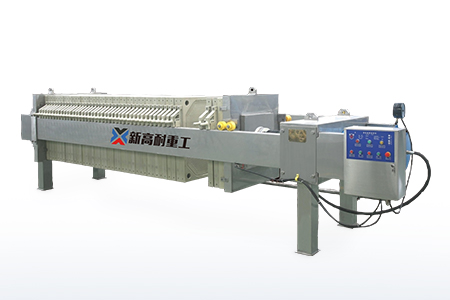
At its heart, the plate and frame filter press working principle revolves around pressure-driven filtration. The equipment consists of alternating plates and frames stacked together, with filter cloths sandwiched between each pair. When slurry is pumped into the closed chamber formed by plates and frames, hydraulic or mechanical pressure is applied to compress the stack. This pressure forces the liquid (filtrate) through the porous filter cloth, while solids are trapped to form a dry filter cake. The plate and frame filter press working principle is defined by this sequential process of feeding, pressing, filtering, and cake discharge—ensuring efficient, high-purity separation.

Step-by-Step Breakdown of Plate and Frame Filter Press Working Principle
Plate & Frame Clamping: The process begins with clamping the stack of plates and frames tightly using a hydraulic cylinder or mechanical screw. This creates airtight chambers between each plate-frame pair, preventing slurry leakage during filtration.
Slurry Feeding: Slurry (a mixture of solids and liquid) is pumped into the closed chambers via a feed port. The pump delivers the slurry at low pressure initially, filling all chambers evenly to avoid uneven cake formation.
Pressure Application & Filtration: Once chambers are full, pressure is increased (typically 0.6–1.6 MPa) using the hydraulic system. This pressure forces the filtrate through the filter cloth—solids are retained on the cloth’s surface, gradually forming a filter cake. The clarified filtrate flows through drainage channels on the plates and is collected for reuse or disposal.
Cake Discharge: When filtration is complete (indicated by reduced filtrate flow), the clamping pressure is released. The plates are separated manually or automatically, and the dry filter cake falls from the chambers—ready for disposal, recycling, or further processing.
Key Components Enabling the Plate and Frame Filter Press Working Principle
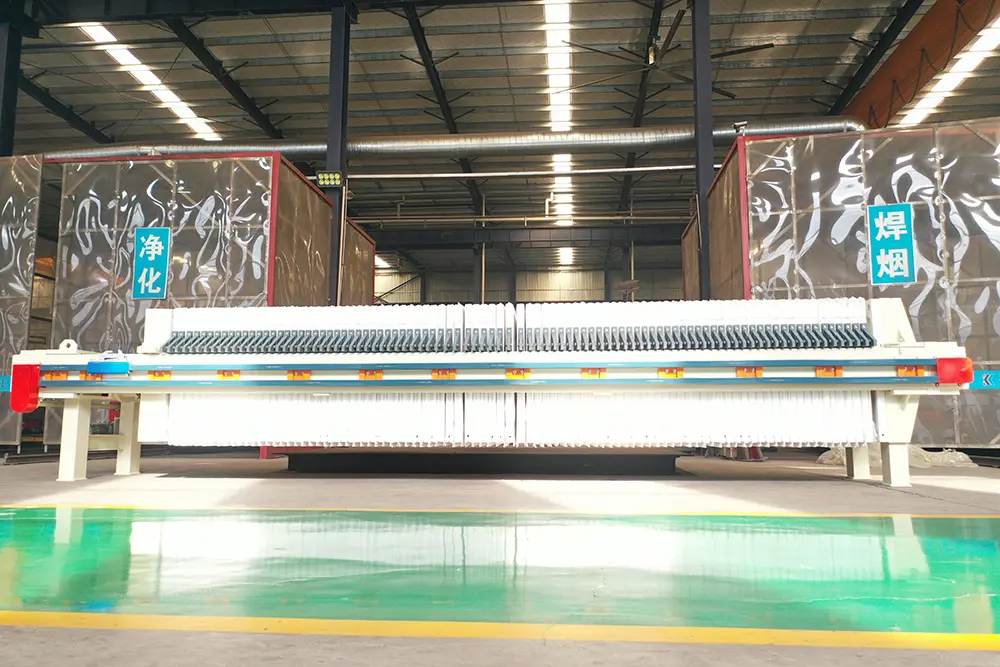
Plates & Frames: Typically made of cast iron, stainless steel, or polypropylene, plates have grooved surfaces to guide filtrate flow. Frames create the chambers that hold the slurry during filtration.
Filter Cloth: A porous, wear-resistant material (e.g., polyester, polypropylene) that acts as a barrier—trapping solids while allowing filtrate to pass. The cloth’s mesh size determines separation precision.
Hydraulic/Mechanical Clamping System: Provides the pressure needed to seal the plate-frame stack and compress the slurry. Hydraulic systems offer higher pressure and automation for industrial-scale operations.
Feed Pump: Delivers slurry to the chambers at controlled pressure, ensuring uniform filling and preventing chamber damage.
Drainage System: Channels and outlets on the plates that collect and direct filtrate away from the filter press.
Control Panel: Modern models feature PLC controls to regulate pressure, feeding time, and clamping/unclamping—automating the plate and frame filter press working principle for consistency.
Factors Influencing the Plate and Frame Filter Press Working Principle
Operating Pressure: Higher pressure (within equipment limits) accelerates filtration and produces drier filter cakes. However, excessive pressure can damage filter cloths or plates.
Filter Cloth Selection: Cloth material and mesh size must match slurry properties—fine mesh for small solids, chemical-resistant cloth for corrosive slurries (e.g., acids in chemical processing).
Slurry Characteristics: Slurry viscosity, solid particle size, and concentration directly impact filtration speed. Pre-treatment (e.g., flocculation) can reduce viscosity and improve separation.
Plate & Frame Maintenance: Clean, undamaged plates and frames ensure a tight seal. Clogged filter cloths (from residue buildup) slow filtration and reduce efficiency.
Industrial Applications of the Plate and Frame Filter Press Working Principle
Mining & Mineral Processing: Separates solids from ore slurries (e.g., gold, copper, iron ore) to recover valuable minerals and treat tailings.
Chemical Industry: Filters catalysts, pigments, and chemical intermediates, ensuring product purity and complying with environmental regulations.
Wastewater Treatment: Removes suspended solids from industrial wastewater (e.g., textile, paper mill effluent) before discharge or reuse.
Food & Beverage: Clarifies liquids like fruit juices, edible oils, and beer by removing pulp, sediment, or impurities.
Pharmaceuticals: Filters active pharmaceutical ingredients (APIs) and excipients to meet strict purity standards for drug production.
Plate and Frame Filter Press Working Principle vs. Other Filter Press Types
vs. Belt Filter Press: The plate and frame design produces drier filter cakes but operates in batches, while belt filter presses offer continuous filtration for high-volume slurries.
vs. Membrane Filter Press: Membrane presses use inflatable membranes to squeeze cakes further, but the core plate and frame filter press working principle (pressure-driven filtration) remains similar—with lower upfront costs for plate and frame models.