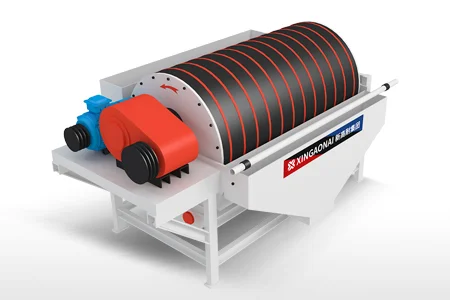
A magnetic separator is an indispensable industrial device engineered to separate magnetic materials from non-magnetic ones using magnetic force. This technology is extensively utilized across a wide spectrum of industries, ranging from mining and mineral processing to waste recycling, food production, chemical manufacturing, and construction. The capability to efficiently and reliably separate magnetic particles from mixtures not only enhances product quality but also boosts operational efficiency, minimizes waste, and supports environmental sustainability. But how exactly does a magnetic separator work? To answer this question thoroughly, we need to explore its core working principle, key components, different types (each with unique operational mechanisms), factors influencing its performance, and real-world industrial applications. By the end of this guide, you will have a clear and practical understanding of the inner workings of magnetic separators and their pivotal role in modern industrial processes.
At its core, a magnetic separator operates on the fundamental principle of magnetic attraction—utilizing a magnetic field to pull and separate ferromagnetic materials (substances that can be magnetized, such as iron, nickel, cobalt, and their alloys) from non-magnetic or weakly magnetic materials (such as quartz, aluminum, plastic, glass, and most non-ferrous metals). However, the exact operational mechanism varies depending on the type of magnetic separator, the strength of the magnetic field, the characteristics of the material mixture, and the specific industrial application. Unlike other separation technologies (e.g., sieving, centrifugation, or filtration), magnetic separation is a physical process that requires no chemicals, making it environmentally friendly, cost-effective, and suitable for a wide range of materials, including dry bulk solids, wet slurries, and even liquids.
Core Working Principle of a Magnetic Separator
To understand how a magnetic separator works, it is first crucial to grasp two key concepts: magnetic fields and magnetic susceptibility. A magnetic field is a region surrounding a magnet (permanent or electromagnetic) where magnetic force acts on magnetic materials. Magnetic susceptibility, on the other hand, is a measure of how easily a material can be magnetized when exposed to a magnetic field. Materials are categorized into three main groups based on their magnetic susceptibility:
1. Ferromagnetic Materials
These materials exhibit high magnetic susceptibility, meaning they are strongly attracted to magnetic fields and can be permanently magnetized. Common examples include iron, steel, magnetite (a naturally magnetic mineral), nickel, and cobalt. Ferromagnetic materials are the primary target of magnetic separators, as they can be easily and efficiently separated from non-magnetic mixtures in industrial settings.
2. Paramagnetic Materials
These materials have low magnetic susceptibility, meaning they are weakly attracted to magnetic fields and lose their magnetization once the field is removed. Examples include hematite (iron ore), ilmenite, chromite, and certain rare earth minerals. Separating paramagnetic materials requires high-intensity magnetic separators, as their weak magnetic properties demand a stronger magnetic force to be effectively captured.
3. Diamagnetic Materials
These materials have negative magnetic susceptibility, meaning they are repelled by magnetic fields (though the repulsion is extremely weak and often negligible in industrial applications). Examples include copper, aluminum, gold, silver, quartz, plastic, glass, and most organic materials. Diamagnetic materials are unaffected by magnetic separators and pass through the magnetic field unimpeded, making them easy to separate from magnetic particles.
The basic operational process of any magnetic separator follows four key steps, regardless of its type or design:
Step 1: Feed the Material Mixture
The first step in magnetic separation is feeding the material mixture (containing both magnetic and non-magnetic particles) into the separator. The feed material can be in dry bulk form (e.g., crushed ore, recycled metal scraps, or food ingredients) or wet slurry form (e.g., mineral slurries, wastewater, or chemical suspensions). The feeding process must be uniform and consistent to ensure optimal separation efficiency—uneven feeding can result in incomplete separation, as some magnetic particles may bypass the magnetic field without being captured.
Step 2: Expose the Mixture to a Magnetic Field
Once the material enters the separator, it is exposed to a strong magnetic field generated by the separator’s magnetic system (either permanent magnets or electromagnetic coils). The magnetic field is strategically positioned to cover the entire path of the material, ensuring that all magnetic particles in the mixture come into contact with the magnetic force. The strength of the magnetic field varies based on the type of material being separated: ferromagnetic materials require a moderate magnetic field (500–5,000 gauss), while paramagnetic materials require a high-intensity magnetic field (10,000–20,000 gauss or higher).
Step 3: Separate Magnetic and Non-Magnetic Particles
When the material mixture passes through the magnetic field, magnetic particles (ferromagnetic or paramagnetic) are attracted to the magnetic source and held in place by the magnetic force. Non-magnetic particles (diamagnetic) are unaffected by the magnetic field and continue moving along their original path, as the magnetic force exerted on them is too weak to alter their trajectory. The separation process relies on the difference in magnetic susceptibility between the two types of particles—this difference ensures that magnetic particles are captured while non-magnetic particles are discharged separately, resulting in two distinct material streams.
Step 4: Discharge the Separated Products
The final step involves discharging the two separated products: magnetic particles and non-magnetic particles. Magnetic particles are retained by the magnetic field until they are moved out of the magnetic zone (either by a rotating drum, conveyor belt, or mechanical scraper), where they are then discharged into a dedicated collection bin. Non-magnetic particles, which are not captured by the magnetic field, continue moving through the separator and are discharged into a separate collection bin. This produces two distinct material streams: one containing pure magnetic particles (for further processing or recycling) and the other containing non-magnetic particles (for disposal, reuse, or additional processing).
Key Components of a Magnetic Separator (and Their Roles)
A magnetic separator’s ability to function effectively depends on its key components, each playing a critical role in the separation process. Understanding these components is essential to answering the question “how does a magnetic separator work,” as each part contributes to generating the magnetic field, moving the material, and separating the particles. Below is a detailed breakdown of the main components and their functions, tailored to industrial operational needs:
1. Magnetic System (Core Component)
The magnetic system is the heart of the magnetic separator, as it generates the magnetic field required for separation. There are two main types of magnetic systems used in industrial magnetic separators: permanent magnetic systems and electromagnetic systems, each suited to specific applications.
Permanent magnetic systems use high-quality permanent magnets (manufactured from materials such as neodymium, samarium-cobalt, or ferrite) to generate a constant magnetic field. These magnets are durable, require no external power source, and have a long service life (up to 10–15 years with proper maintenance).
Permanent magnetic separators are ideal for applications where a consistent magnetic field is required, such as separating ferromagnetic materials in recycling plants or food processing facilities. However, their magnetic field strength is fixed and cannot be adjusted, which limits their versatility for separating materials with varying magnetic susceptibility.
Electromagnetic systems use coils of wire wrapped around a magnetic core (typically made of iron or steel) to generate a magnetic field when an electric current is passed through the coils. The strength of the magnetic field can be easily adjusted by varying the electric current flowing through the coils, making electromagnetic separators highly versatile for separating different types of magnetic materials (from ferromagnetic to paramagnetic). They are commonly used in mineral processing plants, where the magnetic field strength needs to be adjusted based on the type of ore being processed. However, electromagnetic separators require a continuous power supply, consume more energy than permanent magnetic separators, and have a shorter service life due to wear on the coils and electrical components.
2. Feeding System
The feeding system is responsible for delivering the material mixture to the magnetic separator in a uniform, consistent manner— a critical factor for ensuring optimal separation efficiency. A well-designed feeding system ensures that the material is evenly distributed across the width of the separator, maximizing contact with the magnetic field and minimizing the risk of incomplete separation. Common types of feeding systems used in magnetic separators include:
Vibrating Feeders: These feeders use vibration to move material along a trough and into the separator. They are ideal for dry bulk materials (e.g., crushed ore, metal scraps, and food ingredients) and can be adjusted to control the feed rate, ensuring consistent material flow.
Screw Feeders: These feeders use a rotating screw to convey material into the separator. They are suitable for wet slurries, viscous materials, and materials that tend to clump together (such as fine powders), as they prevent material buildup and ensure uniform feeding.
Gravity Feeders: These feeders rely on gravity to move material into the separator, making them simple, low-cost, and low-maintenance. They are ideal for materials with a consistent particle size and good flowability, such as coarse aggregates.
3. Conveying/Transport System
The conveying or transport system moves the material mixture through the magnetic field and ensures that the separated magnetic and non-magnetic particles are transported to their respective discharge points. The type of conveying system depends on the separator type and the form of the material (dry or wet). Common conveying systems include:
Rotating Drums: Used in drum magnetic separators (both dry and wet), the drum is a cylindrical shell that rotates around a fixed magnetic core. Material adheres to the drum’s surface as it passes through the magnetic field, and the drum rotates to move the magnetic particles out of the magnetic zone for discharge.
Conveyor Belts: Used in overband and crossbelt magnetic separators, the conveyor belt carries material through the magnetic field. Magnetic particles are attracted to the magnetic pulley or overband magnet and are lifted off the belt for separation, without interrupting the main material flow.
Chutes/Slurry Pipes: Used in wet magnetic separators, chutes or pipes carry the slurry through the magnetic field. Magnetic particles are attracted to the magnetic plates or coils inside the chute/pipe, while non-magnetic particles and liquid pass through unimpeded.
4. Discharge System
The discharge system is responsible for collecting and removing the separated magnetic and non-magnetic particles from the separator. It consists of two separate discharge outlets: one for magnetic particles and one for non-magnetic particles. The discharge system must be designed to prevent cross-contamination between the two streams (i.e., ensuring magnetic particles do not mix with non-magnetic particles and vice versa). Common discharge mechanisms include:
Scrapers: Mechanical scrapers are used to remove magnetic particles stuck to the surface of the magnetic system (e.g., the drum or magnetic plates). The scrapers are positioned to scrape the magnetic particles off the surface once they exit the magnetic zone, ensuring complete discharge.
Discharge Hoppers: Hoppers are used to collect the separated particles and direct them to the appropriate collection bins or downstream processing equipment. They are designed with sloped sides to prevent material buildup and ensure smooth, uninterrupted discharge.
Conveyor Belts: In some separators, separate conveyor belts are used to transport magnetic and non-magnetic particles to their respective collection points, ensuring minimal cross-contamination and efficient material handling.
5. Control System
The control system monitors and adjusts the operation of the magnetic separator, ensuring optimal separation efficiency and operational stability. For
permanent magnetic separators, the control system is relatively simple (since the magnetic field strength is fixed)—controls typically include feed rate adjustment and scraper speed adjustment. For electromagnetic separators, the control system is more complex, allowing operators to adjust the magnetic field strength (by controlling the electric current), feed rate, conveyor speed, and discharge mechanism. Modern magnetic separators often feature automated control systems with sensors that monitor material flow, magnetic field strength, and separation efficiency, enabling real-time adjustments and reducing the need for manual intervention.
6. Frame and Support Structure
The frame and support structure provide stability to the magnetic separator and hold all components in place. They are typically constructed from heavy-duty steel to withstand the weight of the magnetic system, feeding system, and material load, as well as the vibrations generated during operation. The frame is designed to be adjustable, allowing operators to align the separator with downstream processing equipment and adjust the height and angle of the feeding and discharge systems for optimal performance.
How Different Types of Magnetic Separators Work (Detailed Breakdown)
Magnetic separators are available in various types, each engineered for specific applications, material types (dry or wet), and separation requirements. While all magnetic separators operate on the same basic principle of magnetic attraction, their design and operational mechanisms vary significantly. Below is a detailed explanation of how the most common types of magnetic separators work, with a focus on industrial实操 relevance:
1. Dry Drum Magnetic Separator (Most Widely Used)
The dry drum magnetic separator is the most common type of magnetic separator, primarily used for separating dry bulk materials (e.g., crushed ore, metal scraps, and aggregates). It is widely employed in mining, recycling, and aggregate processing industries due to its simplicity and high throughput. Here’s a step-by-step breakdown of its operation:
Structure: The dry drum magnetic separator consists of a rotating cylindrical drum (made of non-magnetic material such as stainless steel), a fixed magnetic core (permanent or electromagnetic) inside the drum, a feeding system (usually a vibrating feeder), a conveyor belt (to feed material onto the drum), and two discharge hoppers (for magnetic and non-magnetic particles).
Working Process:
The dry material mixture (e.g., crushed iron ore containing magnetic magnetite and non-magnetic quartz) is fed onto the conveyor belt by the vibrating feeder. The conveyor belt transports the material to the rotating drum at a consistent rate.
As the material falls onto the surface of the rotating drum, it comes into contact with the magnetic field generated by the fixed magnetic core inside the drum. The magnetic particles (magnetite) are strongly attracted to the drum’s surface and adhere to it, while the non-magnetic particles (quartz) remain unaffected by the magnetic field.
The drum rotates at a constant speed (typically 10–30 RPM), carrying the magnetic particles stuck to its surface around the drum. Since the magnetic core is fixed, the magnetic field remains in the same position—meaning magnetic particles are held to the drum’s surface only while they are in the magnetic zone.
When the drum rotates and the magnetic particles move out of the magnetic zone, the magnetic force no longer acts on them. At this point, mechanical scrapers (positioned outside the magnetic zone) scrape the magnetic particles off the drum’s surface, and they fall into the magnetic particle discharge hopper.
The non-magnetic particles, which were not attracted to the drum, fall directly off the drum’s surface (or are carried by gravity) into the non-magnetic particle discharge hopper. This completes the separation process, with minimal cross-contamination.
Advantages: The dry drum magnetic separator is simple to operate, low-maintenance, and cost-effective. It is ideal for separating ferromagnetic materials from dry bulk mixtures and can handle large volumes of material efficiently. Disadvantages: It is not suitable for wet or sticky materials, as they can clump together and reduce separation efficiency. It also has limited effectiveness for separating weakly magnetic (paramagnetic) materials.
2. Wet Drum Magnetic Separator
The wet drum magnetic separator is specifically designed for separating magnetic particles from wet slurries (e.g., mineral slurries, wastewater, or chemical suspensions). It is widely used in mineral processing plants (e.g., iron ore, copper ore, and rare earth ore processing) and wastewater treatment facilities, where wet material handling is common. Here’s how it works:
Structure: Similar to the dry drum magnetic separator, the wet drum magnetic separator features a rotating drum (non-magnetic material), a fixed magnetic core inside the drum, a feeding system (slurry pipe or chute), and two discharge outlets. However, the drum is partially submerged in a slurry tank, and the feeding system delivers the slurry directly into the tank for optimal contact with the magnetic field.
Working Process:
The wet slurry (e.g., iron ore slurry containing magnetic hematite and non-magnetic gangue) is pumped into the slurry tank through the slurry pipe. The tank is designed to hold the slurry and ensure that the drum is partially submerged (typically 30–50% of the drum’s diameter), maximizing contact between the slurry and the magnetic field.
The drum rotates at a slow speed (5–15 RPM), and the magnetic core inside the drum generates a strong magnetic field. As the drum rotates, its submerged portion comes into contact with the slurry, allowing magnetic particles to be captured.
Magnetic particles in the slurry (hematite) are attracted to the drum’s surface and adhere to it, while non-magnetic particles (gangue) and water remain in the slurry tank.
As the drum rotates, the magnetic particles are lifted out of the slurry and carried around the drum. When they move out of the magnetic zone (above the slurry level), the magnetic force is no longer exerted on them.
Mechanical scrapers scrape the magnetic particles off the drum’s surface, and they fall into the magnetic particle discharge hopper. The non-magnetic slurry (gangue and water) is discharged from the slurry tank through the non-magnetic discharge outlet, either by gravity or a pump, for further processing or disposal.
Types of Wet Drum Magnetic Separators: There are three main types of wet drum magnetic separators, classified based on the direction of the slurry flow relative to the drum rotation—each suited to specific particle sizes and separation efficiency requirements:
Concurrent Flow: The slurry flows in the same direction as the drum rotation. This type is ideal for separating coarse magnetic particles and offers high throughput, making it suitable for large-scale operations.
Countercurrent Flow: The slurry flows in the opposite direction to the drum rotation. This type is ideal for separating fine magnetic particles and delivers higher separation efficiency, making it suitable for high-purity applications.
Semicountercurrent Flow: The slurry flows at a 90-degree angle to the drum rotation. This type balances throughput and separation efficiency, making it suitable for a wide range of wet separation applications.
3. Overband Magnetic Separator
The overband magnetic separator (also known as a suspended magnetic separator) is designed to remove magnetic contaminants (e.g., iron scraps, bolts, and nails) from bulk materials being transported on a conveyor belt. It is widely used in recycling plants, coal-fired power plants, aggregate plants, and food processing facilities, where contaminant removal is critical for equipment protection and product quality. Here’s how it works:
Structure: The overband magnetic separator consists of a large magnetic pulley or a suspended magnetic beam (permanent or electromagnetic) mounted above a conveyor belt. It also includes a discharge chute for the magnetic contaminants and a support frame to suspend the magnet above the conveyor, ensuring optimal coverage of the material flow.
Working Process:
Bulk material (e.g., recycled plastic, coal, or food ingredients) is transported on a conveyor belt. The overband magnetic separator is suspended above the conveyor belt, with the magnetic field extending downward onto the material, covering the entire width of the belt.
As the material moves under the magnetic separator, any magnetic contaminants (e.g., iron scraps in recycled plastic) are attracted to the magnetic field and lifted off the conveyor belt, separating them from the main material stream.
The magnetic contaminants are held in place by the magnetic field as the conveyor belt continues to move. The magnetic separator is either stationary (with a rotating magnetic pulley) or moves slowly in the opposite direction to the conveyor belt, ensuring that the magnetic contaminants are carried away from the main material flow.
Once the magnetic contaminants are moved out of the magnetic zone (typically to the side of the conveyor belt), they fall into the discharge chute and are collected in a separate bin. The clean, non-magnetic material continues moving along the conveyor belt to downstream processing.
Advantages: The overband magnetic separator is easy to install and operate, and it can be retrofitted onto existing conveyor systems without major modifications. It removes magnetic contaminants without interrupting the material flow, making it ideal for continuous production lines. Disadvantages: It is only effective for removing large magnetic contaminants; fine magnetic particles may not be captured due to the weaker magnetic field at the bottom of the separator.
4. High-Intensity Magnetic Separator (HIMS)
The high-intensity magnetic separator (HIMS) is engineered to separate weakly magnetic (paramagnetic) materials (e.g., hematite, ilmenite, chromite, and rare earth minerals) from non-magnetic materials. It generates a much stronger magnetic field (10,000–20,000 gauss or more) than standard magnetic separators, making it suitable for applications where standard separators fail to achieve effective separation. Here’s how it works:
Structure: The HIMS consists of a magnetic circuit with high-intensity electromagnetic coils, a rotating rotor (with magnetic poles), a feeding system, and two discharge outlets. The electromagnetic coils are cooled (either by air or water) to prevent overheating, as they consume large amounts of energy to generate the high-intensity magnetic field required for separating weakly magnetic particles.
Working Process:
The material mixture (e.g., hematite ore containing weakly magnetic hematite and non-magnetic quartz) is fed into the separator by a vibrating feeder. The material is evenly distributed across the width of the rotating rotor, ensuring uniform exposure to the magnetic field.
The electromagnetic coils generate a high-intensity magnetic field, which is concentrated at the magnetic poles of the rotor. As the rotor rotates, the material comes into contact with the magnetic poles, where the magnetic force is strongest.
Weakly magnetic particles (hematite) are attracted to the magnetic poles, even though their magnetic susceptibility is low. The strong magnetic force overcomes the gravitational force and holds the particles to the rotor, ensuring they are not lost to the non-magnetic stream.
Non-magnetic particles (quartz) are unaffected by the magnetic field and fall into the non-magnetic discharge hopper, while the magnetic particles remain attached to the rotor.
As the rotor rotates, the magnetic particles are carried around the rotor until they move out of the high-intensity magnetic zone. At this point, the magnetic force is no longer strong enough to hold the particles, so they fall into the magnetic discharge hopper, completing the separation process.
Types of HIMS: Common types of high-intensity magnetic separators include induced roll magnetic separators (IRMS), rare earth magnetic separators, and superconducting magnetic separators (which generate even stronger magnetic fields, up to 50,000 gauss), each tailored to specific weakly magnetic material separation needs.
5. Crossbelt Magnetic Separator
The crossbelt magnetic separator is similar to the overband magnetic separator but is mounted directly on the conveyor belt’s head pulley. It is designed to remove magnetic contaminants from the material as it is discharged from the conveyor belt, making it ideal for applications where space is limited or where contaminants need to be removed at the end of a conveyor line. Here’s how it works:
Structure: The crossbelt magnetic separator consists of a magnetic pulley (permanent or electromagnetic) that replaces the head pulley of the conveyor belt. The magnetic pulley is surrounded by a non-magnetic shell, and a discharge chute is positioned to collect the magnetic contaminants as they are separated from the main material stream.
Working Process:
Material is transported on the conveyor belt to the head pulley (magnetic pulley), where it is prepared for discharge.
As the material reaches the head pulley and begins to discharge (by gravity), it comes into contact with the magnetic field generated by the magnetic pulley, ensuring all particles are exposed to the magnetic force.
Magnetic contaminants (e.g., iron scraps) are attracted to the magnetic pulley and stick to the conveyor belt as it wraps around the pulley, separating them from the non-magnetic material.
The conveyor belt continues to move, carrying the magnetic contaminants around the pulley. When the belt moves away from the pulley (and out of the magnetic zone), the magnetic force is no longer exerted on the contaminants, so they fall into the discharge chute.
The clean, non-magnetic material is discharged from the conveyor belt into the main collection bin, while the magnetic contaminants are collected separately for disposal or recycling.
Conclusion
The question “how does a magnetic separator work” can be answered simply: magnetic separators use magnetic force to separate magnetic materials from non-magnetic materials, based on the difference in magnetic susceptibility between the two types of particles. However, as we have explored in this comprehensive guide, the inner workings of magnetic separators are more complex, involving carefully designed components (magnetic system, feeding system, conveying system, etc.), different operational mechanisms for different types of separators, and a range of factors that influence performance—all critical for industrial operators to understand.
Magnetic separators are essential tools in modern industrial processes, playing a pivotal role in mining, recycling, food processing, chemical manufacturing, and many other industries. They enable efficient separation of valuable magnetic materials, removal of contaminants, and promotion of environmental sustainability—all while being cost-effective, easy to operate, and environmentally friendly, making them a cornerstone of efficient industrial operations.
To ensure that a magnetic separator works effectively, it is essential to choose the right type for the application, understand its operational mechanism, consider the key factors that affect performance, and follow proper maintenance practices. By doing so, operators can maximize separation efficiency, extend the separator’s service life, reduce operational costs, and achieve their production goals—driving productivity and profitability.
Whether you are working in a mining plant, a recycling facility, or a food processing plant, understanding how a magnetic separator works is key to unlocking its full potential and ensuring the success of your industrial processes, supporting long-term operational excellence.