The
plate and frame filter press is a time-tested solid-liquid separation equipment widely used in mining, chemical manufacturing, wastewater treatment, and food processing. To make informed decisions about equipment selection, understanding the advantages and disadvantages of plate and frame filter press is critical for industrial operators and buyers. This filter press relies on pressure-driven batch filtration to produce dry filter cakes and clarified filtrate, but its performance varies based on application needs, production volume, and operational conditions. Below is a detailed analysis of the advantages and disadvantages of plate and frame filter press, helping you evaluate if it’s the right choice for your operations.
The plate and frame filter press has maintained its popularity for decades due to its unique strengths, which address key industrial separation needs:
One of the top advantages of plate and frame filter press is its ability to achieve high-purity separation. The pressure-driven design (typically 0.6–1.6 MPa) forces filtrate through dense filter cloths, trapping even fine solid particles (down to 1–5 μm). This results in clarified filtrate with low solid content—ideal for applications requiring strict liquid purity, such as chemical product refining or wastewater reuse.
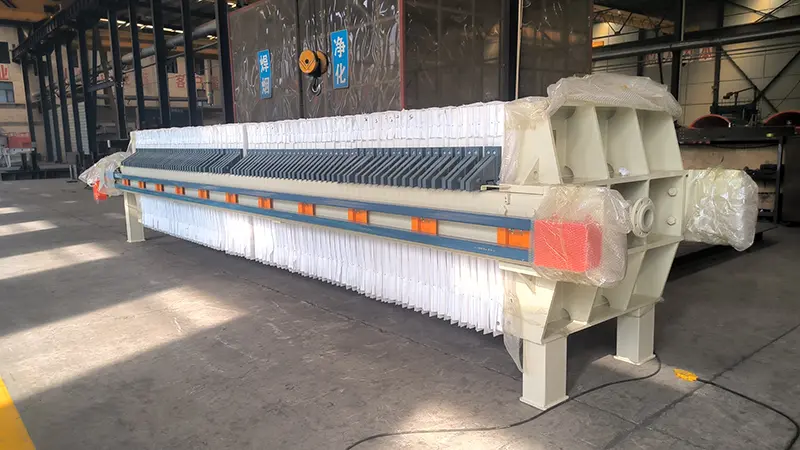
Compared to other filter press types (e.g., belt filter presses), the plate and frame filter press produces significantly drier filter cakes (moisture content as low as 15–30%). Dry cakes reduce disposal costs (less weight and volume for transport) and simplify recycling—critical for industries like mining, where filter cakes may contain valuable minerals, or food processing, where solids can be repurposed.
The plate and frame filter press features a straightforward design: alternating plates/frames, filter cloths, a clamping system, and a feed pump. This simplicity translates to lower manufacturing costs, making it a budget-friendly option for small-to-medium enterprises (SMEs) or operations with limited capital. Additionally, the simple structure reduces the risk of complex mechanical failures.
Another key advantage of plate and frame filter press is its ability to handle diverse slurries—from corrosive chemical mixtures and abrasive mining slurries to viscous food pastes. Plates and frames can be manufactured from materials like stainless steel, polypropylene, or cast iron to resist corrosion, while filter cloths (polyester, nylon, or Teflon) can be selected based on slurry properties (pH, temperature, particle size).
Plate and frame filter presses are highly scalable: additional plates and frames can be added to the stack to increase filtration area and capacity. This flexibility allows businesses to expand production without replacing the entire unit—adapting to growing or changing separation needs.
Unlike continuous filtration equipment (e.g., centrifuges) that require high power for operation, the plate and frame filter press consumes energy primarily during the clamping and feeding stages. For batch operations, this results in lower energy costs compared to high-speed alternatives, especially for small-volume processing.
Despite its strengths, the advantages and disadvantages of plate and frame filter press must be weighed objectively—its limitations may make it unsuitable for certain applications:
A major disadvantage of plate and frame filter press is its batch-style workflow: feeding, pressing, filtering, and cake discharge are sequential steps that require downtime between cycles. This makes it inefficient for high-volume operations (e.g., large-scale mining or municipal wastewater treatment) where continuous filtration is needed. Cycle times can range from 30 minutes to several hours, depending on slurry viscosity and filter area.
Traditional plate and frame filter presses require manual intervention for cake discharge, filter cloth cleaning, and plate clamping. This increases labor costs and slows down operations—especially for facilities with frequent cycles. While automated models (with hydraulic clamping and automatic plate shifting) exist, they come with higher upfront costs.
Filter cloths are critical to the plate and frame filter press’s performance, but they are prone to clogging, wear, and damage from abrasive slurries. Regular cleaning (manual or with backwashing systems) and replacement are necessary to maintain efficiency—adding to operational costs and downtime. In corrosive or high-temperature environments, cloth lifespan is further reduced.
The
plate and frame filter press requires significant floor space due to its stacked plate-frame design and the need for clearance during cake discharge. For facilities with limited space (e.g., urban wastewater treatment plants or compact chemical labs), this can be a major constraint—unlike more compact options like membrane filter presses or centrifuges.
The plate and frame filter press struggles with high-viscosity slurries (e.g., thick chemical pastes or high-solids mining slurries). Viscous materials flow slowly through filter cloths, extending cycle times and reducing throughput. Pre-treatment (e.g., dilution or flocculation) is often required, adding extra steps and costs to the process.
Entry-level plate and frame filter presses lack advanced automation features like real-time pressure monitoring, filter cloth condition sensors, or remote control. This can lead to inconsistent filtration results (e.g., uneven cake formation or incomplete separation) and requires skilled operators to adjust parameters manually.
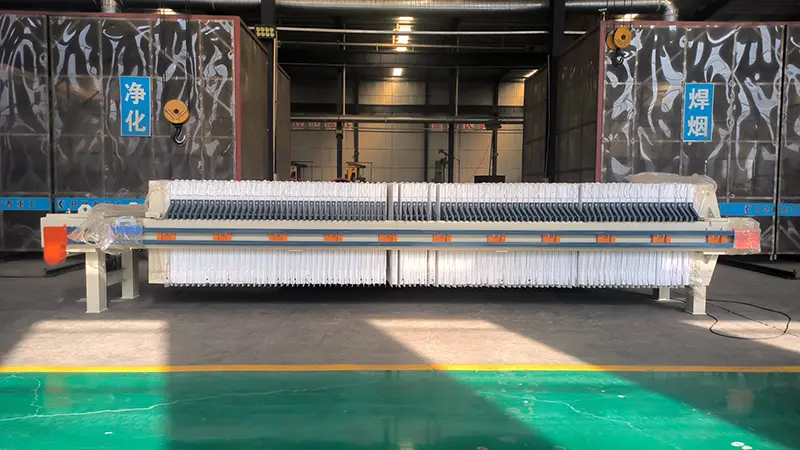
Understanding the advantages and disadvantages of plate and frame filter press helps identify its ideal use cases:
Best For: Small-to-medium batch operations, applications requiring dry filter cakes or high-purity filtrate (e.g., small mining operations, specialty chemical production, food processing, and laboratory-scale separation).
Not Ideal For: High-volume continuous production, facilities with limited space or labor, or operations handling highly viscous or abrasive slurries (without pre-treatment).
To further contextualize its pros and cons, here’s how the plate and frame filter press stacks up against a popular alternative:
The advantages and disadvantages of
plate and frame filter press highlight its role as a reliable, cost-effective solution for specific solid-liquid separation needs. Its strengths—high separation efficiency, dry filter cakes, material adaptability, and low upfront cost—make it a top choice for batch operations and SMEs. However, its limitations (batch workflow, labor/maintenance demands, large footprint) mean it may not be suitable for high-volume or space-constrained facilities.
When evaluating the plate and frame filter press, align its pros and cons with your operational requirements: production volume, slurry properties, space availability, labor resources, and budget. For many industrial applications, the advantages of plate and frame filter press outweigh its drawbacks—especially when paired with upgrades like automated clamping or filter cloth cleaning systems.