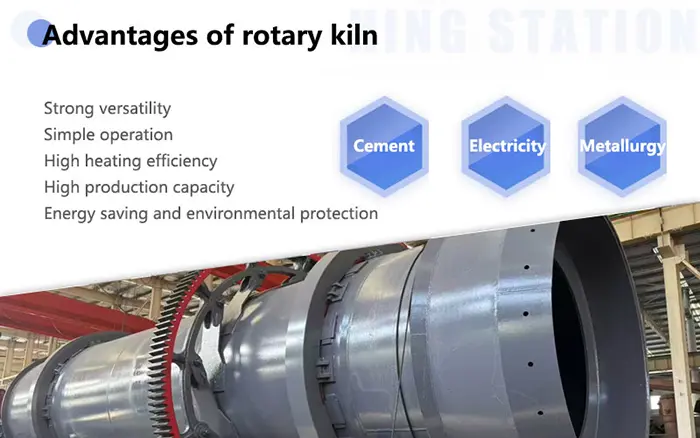
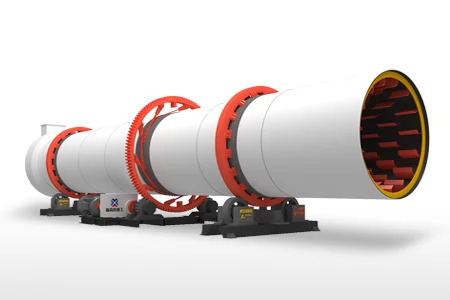
A rotary dryer is a machine used to reduce the moisture content of bulk solids. It is widely used in industries like mining, agriculture, chemical processing, and construction. Common materials dried in rotary dryers include sand, limestone, clay, coal, fertiliser, sawdust, and mineral concentrates.
When you are in the market for a rotary dryer, you will see many specifications. These numbers tell you how the dryer performs and whether it fits your material and production needs. This article explains the most important rotary dryer specifications in simple terms. By the end, you will know what to look for and how to choose the right dryer for your job.
What Is a Rotary Dryer?
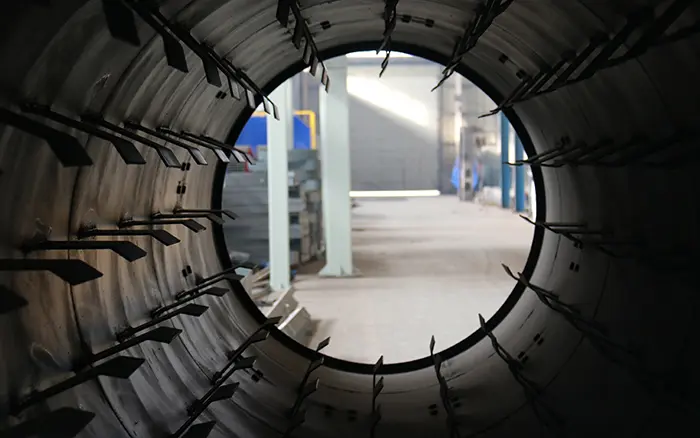
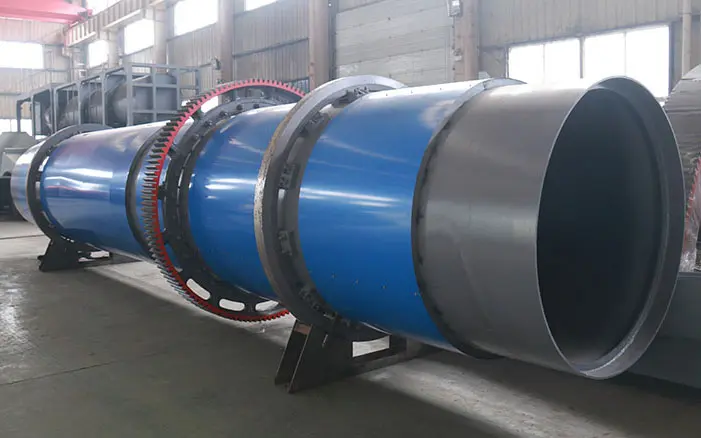
A rotary dryer is a large, rotating cylindrical drum that is slightly tilted. Wet material enters at the higher end. As the drum rotates, internal flights (lifters) pick up the material and shower it through a stream of hot gas (usually air). The moisture evaporates, and the dried material exits at the lower end.
The performance of a rotary dryer depends on several design and operating parameters. These are the rotary dryer specifications you need to understand.
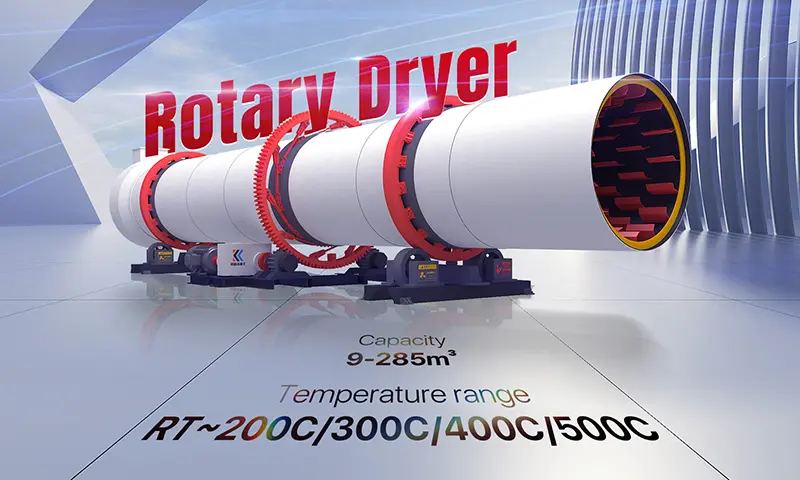
Key Rotary Dryer Specifications
Here are the most important specifications to consider when selecting a rotary dryer.
1. Drum Diameter and Length
The drum is the main body of the dryer. Its size is given as diameter × length (e.g., 1.5 m × 12 m). The diameter affects the gas velocity and throughput capacity. The length affects the retention time (how long the material stays inside).
Typical ranges: Diameter from 0.5 m to 5 m. Length from 3 m to 40 m. The ratio of length to diameter is usually between 4:1 and 10:1.
2. Slope (Inclination)
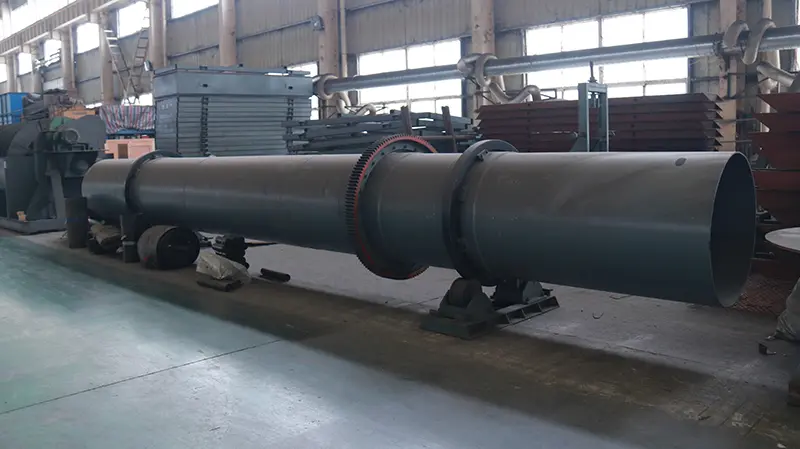
The drum is installed at a slight angle to help move material from the inlet to the outlet. Slope is usually expressed in degrees or as a percentage (rise per 100 units of length).
Typical slope: 2° to 5° (about 3% to 8%). A steeper slope moves material faster, reducing retention time. A shallower slope increases retention time, which gives more drying but lowers capacity.
3. Rotation Speed
The drum rotates at a certain speed, measured in revolutions per minute (RPM). Rotation speed controls how often the material is lifted and showered through the hot gas. Faster rotation increases the number of lift cycles, improving heat transfer, but it can also increase dust carryover.
Typical speed: 2 to 8 RPM for most industrial dryers. Small dryers may run faster (up to 15 RPM). Variable-speed drives are common to adjust the speed based on material type and moisture content.
4. Operating Temperature
The temperature inside the dryer is a critical specification. It is usually given as the inlet gas temperature (at the feed end) and the outlet gas temperature (at the discharge end). Higher inlet temperatures speed up drying but may damage heat-sensitive materials or increase fuel costs.
Typical ranges: Inlet temperature 200°C to 1000°C depending on the fuel and material. Outlet temperature 50°C to 150°C to prevent condensation and ensure dry product.
5. Retention Time (Residence Time)
Retention time is how long the material stays inside the dryer. It is calculated from the drum length, slope, rotation speed, and material flow characteristics. Longer retention time means more moisture removal but lower throughput.
Typical retention time: 10 to 60 minutes for most materials. For very wet or hard-to-dry materials, it can be longer.
6. Capacity (Throughput)
Capacity is the amount of material the dryer can process per hour, usually measured in tons per hour (TPH) or kilograms per hour. The capacity depends on the material density, initial moisture, final moisture, and thermal efficiency.
Typical ranges: Small dryers: 0.5–5 TPH. Medium dryers: 5–30 TPH. Large dryers: 30–200 TPH or more.
7. Moisture Removal Rate
This specification tells you how much water the dryer can evaporate per hour. It is often more important than the total throughput because the goal is to remove water.
Typical evaporation rates: 50 to 500 kg of water per hour for small dryers. Large dryers can remove 10,000 kg/h or more.
8. Material Specifications
The dryer must match the material being processed. Important material properties include:
Bulk density (kg/m³) – affects loading and power requirements.
Particle size distribution – fine materials may require dust collection
Initial moisture content (%) – determines evaporation load.
Final moisture content (%) – the target after drying
Abrasiveness – affects internal wear parts like flights and shell.
Stickiness or caking tendency – may require special internal design.
9. Fuel Type and Energy Consumption
Rotary dryers use different fuels: natural gas, diesel, coal, biomass (wood chips, rice husks), or electricity. The specification should include the burner type, heat input, and thermal efficiency.
Typical thermal efficiency: 50% to 85% depending on design and insulation. Higher efficiency means lower fuel cost per ton of product.
10. Flight Design (Lifters)
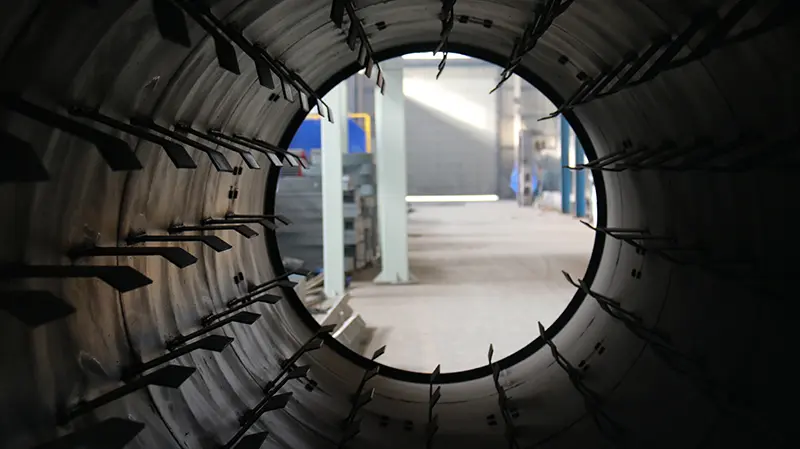
Flights are the internal blades that lift and shower the material. Their shape, number, and arrangement affect drying efficiency. Common flight types include straight, curved, and angular. Some dryers use adjustable flights to fine-tune the showering pattern.
11. Airflow Configuration
There are two main airflow configurations:
Co-current (parallel flow): Hot gas and material move in the same direction. Best for heat-sensitive materials because the material never sees the highest temperature.
Counter-current (opposite flow): Hot gas moves against the material flow. The material meets the hottest gas right at the discharge end, which allows higher final temperatures and lower moisture content. Good for materials that can handle high heat.
12. Drive System
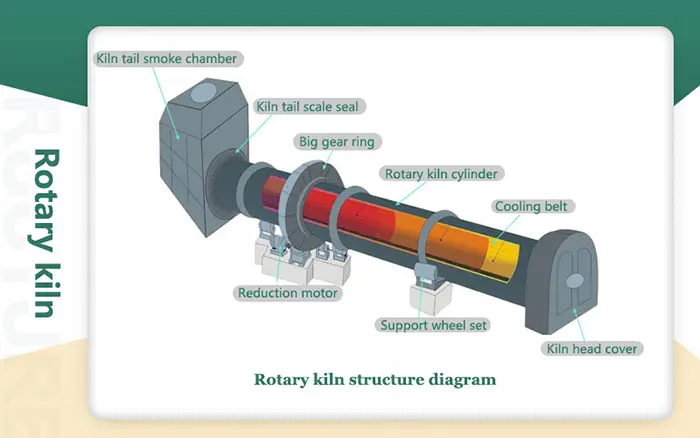
The drive system includes the motor, gearbox, girth gear, pinion, and trunnion rollers. Key specifications are motor power (kW or HP) and the type of drive (central or chain-driven). Motor power depends on the drum weight, material load, and friction.
13. Material of Construction
Most rotary dryers are made of carbon steel. For high-temperature or corrosive materials, stainless steel or alloy steel may be used. The shell thickness is specified to withstand the drum weight and thermal stresses.
14. Airflow Rate (Gas Volume)
The volume of hot gas passing through the drum is measured in cubic meters per minute (m³/min) or cubic feet per minute (CFM). It affects the velocity that carries away evaporated moisture. Too low a gas velocity causes condensation. Too high a velocity carries away fine particles.
Typical gas velocity: 1.5 to 5 m/s inside the drum.
15. Emissions and Dust Collection
Rotary dryers often produce dust, especially with fine materials. Specifications should include the type of dust collection equipment: cyclones, baghouses, or wet scrubbers. Emission limits are set by local regulations.
How to Read a Rotary Dryer Specification Sheet
A typical specification sheet for a rotary dryer might look like this:
| Parameter | Value |
|---|---|
| Drum diameter | 2.2 m |
| Drum length | 18 m |
| Slope | 3° |
| Rotation speed | 4 RPM (variable) |
| Inlet temperature | 650°C |
| Outlet temperature | 110°C |
| Capacity (sand) | 25 TPH |
| Initial moisture | 15% |
| Final moisture | 1% |
| Motor power | 75 kW |
| Fuel type | Natural gas |
| Airflow configuration | Co-current |
| Material | Carbon steel |
This sheet tells you that the dryer can handle 25 tons per hour of sand, reducing moisture from 15% down to 1% using 650°C inlet gas.
How to Choose the Right Rotary Dryer Specifications for Your Material
Follow these steps to select the correct rotary dryer specifications.
Step 1: Define your material properties. Bulk density, particle size, initial and final moisture, and stickiness.
Step 2: Determine your required throughput. How many tons per hour do you need to process?
Step 3: Calculate the evaporation load. (Initial moisture % – Final moisture %) × Throughput = kg of water to remove per hour.
Step 4: Choose the airflow configuration. Co-current for heat-sensitive materials. Counter-current for low final moisture requirements.
Step 5: Select drum size. A larger diameter allows more gas flow and higher capacity. A longer drum increases retention time.
Step 6: Specify slope and speed. Adjust these to achieve the needed retention time (usually 10–30 minutes).
Step 7: Decide on material of construction. Carbon steel is standard. Stainless steel for acidic or high-temperature materials.
Step 8: Add dust collection if needed. If fines are a problem, include a cyclone or baghouse.
Step 9: Plan for the drive and trunnion bearings. Ensure they are rated for the drum weight and load.
Common Mistakes When Evaluating Rotary Dryer Specifications
Ignoring material variability: Your material may have different moisture or particle size at different times. The dryer should handle the worst case.
Overestimating available space: Rotary dryers are long and require space for the burner, feed system, discharge, and dust collector.
Forgetting about emissions compliance: Many regions have strict limits on dust and exhaust gas.
Choosing too high an inlet temperature: It may burn or degrade some materials.
Not considering fuel availability: If natural gas is not available at your site, you need a different burner.
Summary
Rotary dryer specifications cover many parameters: drum dimensions, slope, rotation speed, temperature, retention time, capacity, airflow configuration, drive power, and construction material. Understanding these specifications helps you select a dryer that matches your material and production goals. Always provide a complete material sample to the manufacturer for testing. This ensures the final design meets your needs.
For custom rotary dryer specifications, contact an experienced manufacturer. They can run lab tests and design a dryer tailored to your exact material and capacity requirements.