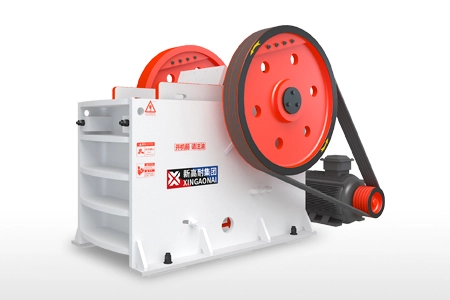
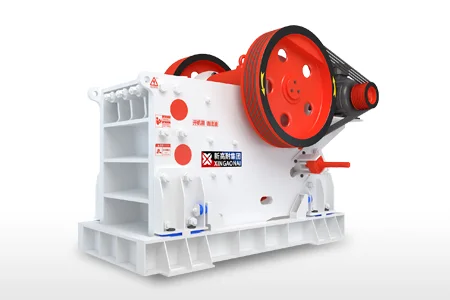
In the crushing industry, PE series and PEV series jaw crushers are both widely used primary and secondary crushing equipment, playing crucial roles in mining, construction, and aggregate production. While they share the core principle of extrusion crushing, their structural designs, performance characteristics, and application scenarios differ significantly. Understanding these differences is essential for enterprises to select the right equipment, optimize production efficiency, and reduce operational costs. This article will systematically compare the two series from multiple perspectives to provide practical guidance for your equipment selection.
Basic Definition: Functional Positioning Distinction
The fundamental difference between PE and PEV series jaw crushers starts with their functional positioning, which directly determines their application stages in the crushing process.
PE Series Jaw Crusher: As the "classic primary crusher", the "PE" stands for "Primary Crusher". It is specifically designed for the initial crushing of raw materials, focusing on reducing large-sized (up to several meters) hard and medium-hard materials (granite, basalt, limestone) into medium-sized particles that meet the feeding requirements of subsequent equipment (cone crushers, impact crushers).
PEV Series Jaw Crusher: The "PEV" represents "Primary and Secondary Variable Crusher", which is an upgraded version of the PE series. It integrates the functions of primary and secondary crushing, capable of not only handling raw materials but also further refining medium-sized particles into finer aggregates, reducing the need for additional secondary crushing equipment.
Structural Design: Core Component Differences
Structural optimization is the key to distinguishing the two series, and the differences in core components directly lead to variations in performance.
Component | PE Series Jaw Crusher | PEV Series Jaw Crusher |
|---|
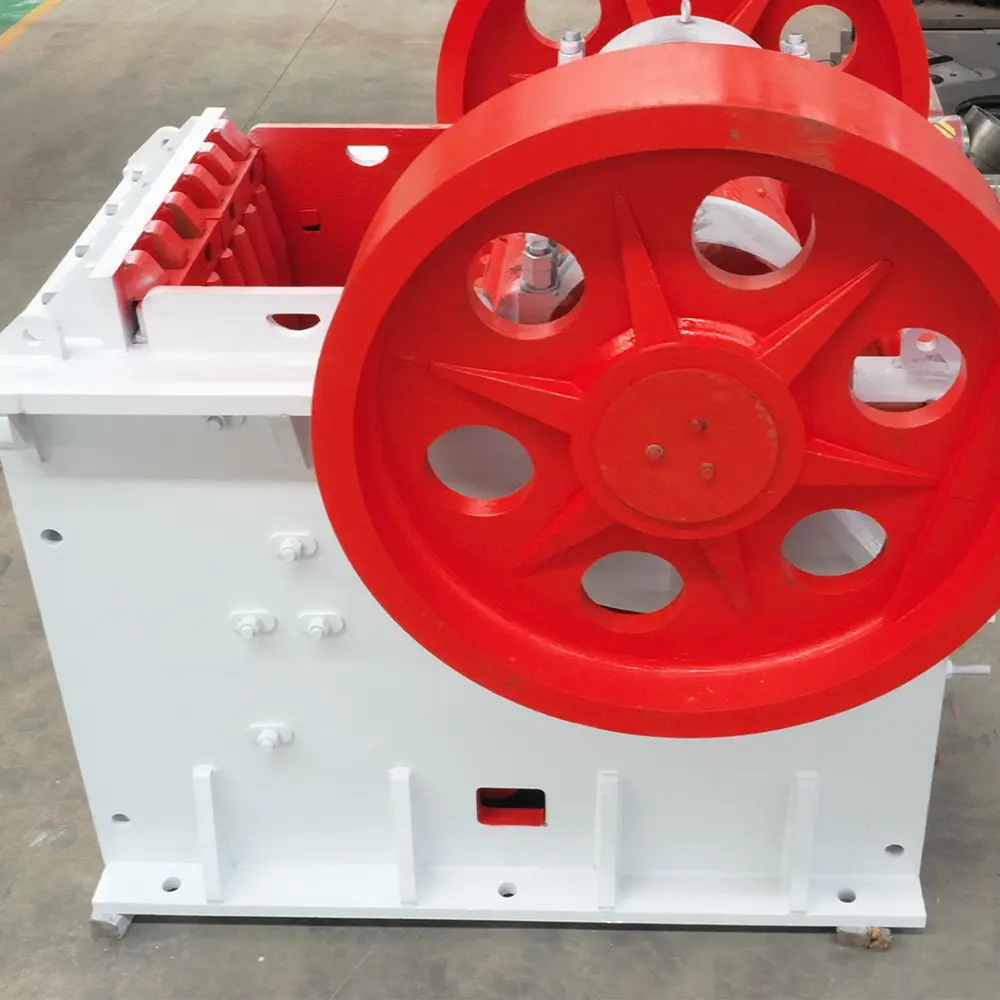
Movable Jaw Structure | Adopts a traditional swing-type structure with a single eccentric shaft drive. The movement trajectory is relatively fixed, focusing on strong extrusion force. | Equipped with a dual-crank linkage structure, the movable jaw has a more complex "crushing + grinding" trajectory, enhancing the fine crushing effect. |
Crushing Chamber | "V"-shaped chamber with a large upper opening and a small lower opening, suitable for large feeding sizes. The chamber wall is relatively straight, emphasizing high throughput. | Curved optimized chamber design. The lower part of the chamber has a smaller gap, and the curved surface extends the material retention time, improving crushing efficiency and product particle shape. |
Toggle Plate System | Single toggle plate structure, mainly playing a supporting role and safety protection (breaking when encountering uncrushable materials). | Dual toggle plate with a buffer device, reducing impact vibration during operation and improving equipment stability during long-term fine crushing. |
Performance Characteristics: Efficiency, Particle Size, and Energy Consumption
Performance is the core concern of users, and the two series show obvious differences in crushing efficiency, product quality, and energy consumption.
1. Crushing Efficiency and Capacity
The PE series has a strong throughput capacity, with a single machine capacity ranging from 1-1000 tons per hour, suitable for large-scale primary crushing lines. Its advantage lies in quickly processing large materials without excessive pursuit of particle fineness. The PEV series, with its optimized movable jaw trajectory and curved chamber, has a 15%-25% higher crushing efficiency for medium-hard materials than the PE series. Although its maximum feeding size is smaller (generally within 1 meter), it can complete the work of two machines (primary + secondary crushing), saving production space.
2. Product Particle Size and Shape
The PE series produces products with uneven particle sizes, mostly medium-coarse aggregates (discharge particle size 10-100mm), and the particle shape is irregular, suitable for scenarios with low requirements for finished products (such as subgrade filling). The PEV series has a more precise crushing effect, the discharge particle size can be adjusted to 5-50mm, and the proportion of needle-like particles is reduced by 30%, which meets the high-standard requirements of construction aggregates (such as concrete mixing).
3. Energy Consumption and Wear Resistance
The PE series has a simple structure and low unit energy consumption (about 0.5-1.0 kWh/ton) when processing large materials, but the jaw plate wears quickly due to the large extrusion force. The PEV series adopts high-wear-resistant alloy jaw plates and optimized force distribution, which reduces the wear rate by 20% compared with the PE series. Although the unit energy consumption is slightly higher (1.0-1.5 kWh/ton) during fine crushing, the overall energy consumption is lower when completing the same crushing process (primary + secondary).
Application Scenarios: Targeted Selection Based on Needs
The difference in functional positioning determines the targeted application of the two series in different industries and production lines.
PE Series Application Scenarios:
Mining industry: Primary crushing of large ore blocks (iron ore, copper ore) with feeding size over 1 meter.
Infrastructure construction: Crushing of large construction waste (concrete blocks, brick aggregates) in demolition sites.
Cement industry: Primary crushing of limestone with large particle size in cement raw material processing.
PEV Series Application Scenarios:
Construction aggregate production: Production of high-quality concrete aggregates and asphalt mixtures with fine particle size requirements.
Small and medium-sized mining plants: Integrated crushing of medium-sized ores (gold ore, lead-zinc ore) to reduce equipment investment.
Highway construction: Production of graded crushed stone with uniform particle size for pavement base.
Selection Suggestions: Matching Equipment to Production Requirements
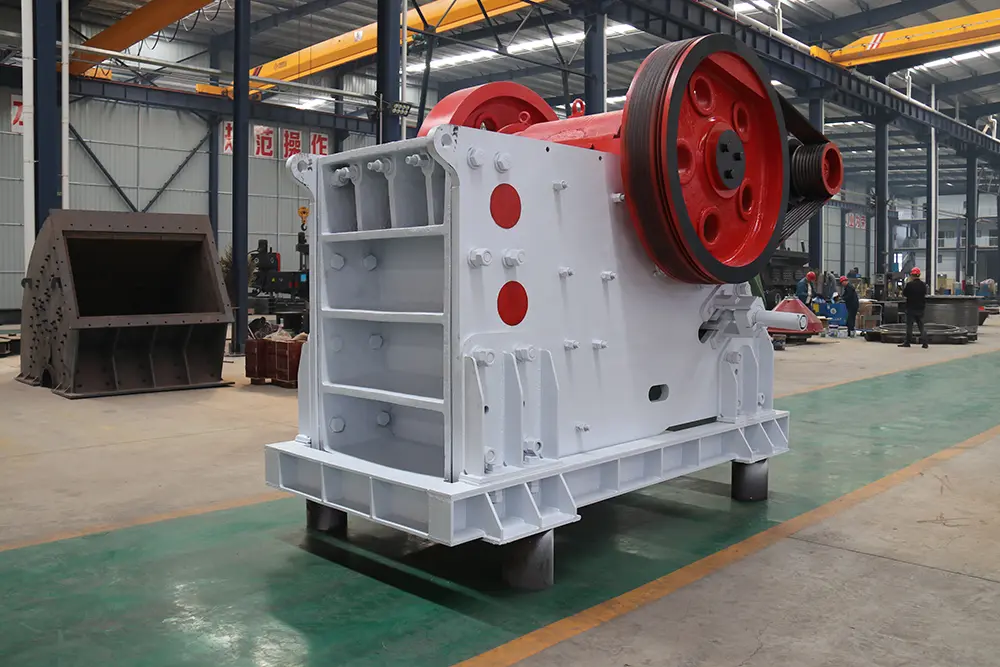
To select the right jaw crusher between PE and PEV series, enterprises should focus on three core factors: raw material characteristics, finished product requirements, and production scale.
Choose PE series if: You need to process large-sized (>1m) hard materials, focus on high throughput, and the finished products are used for low-standard scenarios (subgrade, filling).
Choose PEV series if: You pursue integrated primary and secondary crushing, require fine and uniform finished products, and aim to reduce equipment investment and production space.
Conclusion
The PE series and
PEV series jaw crushers are not "superior or inferior" but "suitable or not". The PE series is the cornerstone of large-scale primary crushing, with stable performance and strong adaptability; the PEV series is an upgraded solution for integrated crushing, optimizing efficiency and product quality. With the development of the crushing industry, both series are constantly integrating intelligent technologies (such as automatic feeding control and wear monitoring) to meet the increasingly diverse production needs.
Whether you are building a new crushing line or upgrading existing equipment, clarifying the differences between the two series and combining your actual production needs is the key to achieving cost reduction and efficiency increase. If you need more detailed technical parameters or customized selection plans, you can consult professional crushing equipment suppliers for personalized support.