

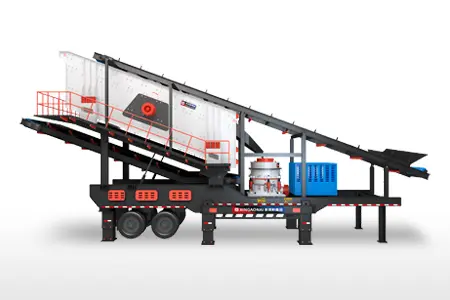
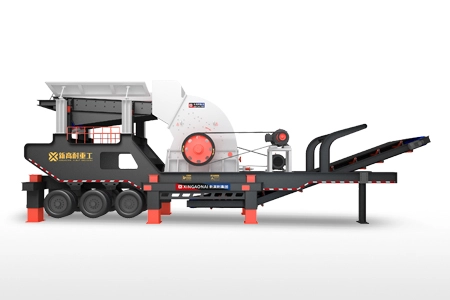
Core Advantages of Mobile Jaw Crushing Plant
Exceptional Mobility: Tracked models navigate rough terrain (mines, construction sites); wheeled versions offer fast transportation on paved roads—both set up in hours.
On-Site Crushing Efficiency: Processes raw materials directly at the source, reducing transportation costs by 30-50% compared to stationary plants.
Compact & Integrated Design: Combines feeding, crushing, screening, and conveying in one unit, saving space and simplifying operation.
Versatile Application: Handles medium-to-hard materials (granite, basalt, concrete) for aggregates, road construction, and mining.
Easy Operation & Maintenance: Intuitive control panels, accessible components, and durable construction minimize downtime and labor requirements.
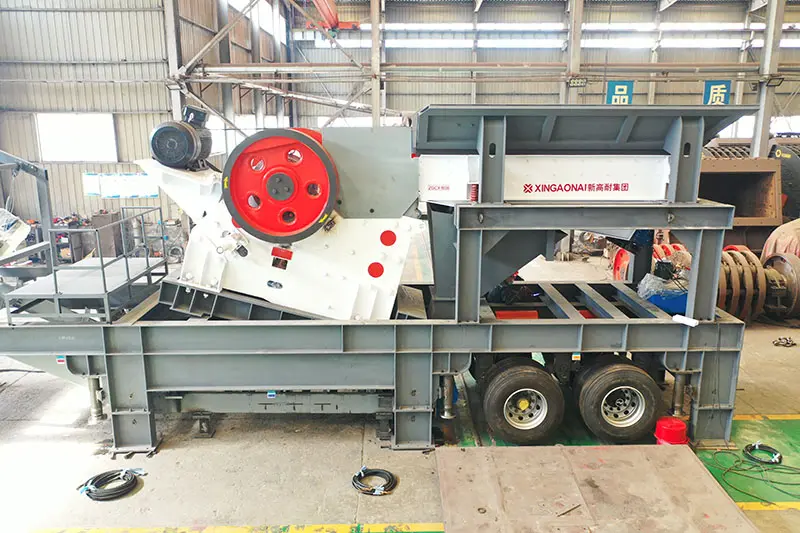
How Does a Mobile Jaw Crushing Plant Work?
Feeding: Raw materials are fed into the jaw crusher via a vibrating feeder, ensuring uniform input to avoid overload.
Crushing: The jaw crusher’s fixed and moving jaws compress materials into smaller particles (typically 10-50mm), adapting to material hardness with adjustable discharge gaps.
Screening: Crushed materials pass through an integrated vibrating screen to separate qualified aggregates from oversized particles.
Conveying & Discharging: Qualified aggregates are transported via a conveyor to storage or further processing; oversized particles are recycled back to the crusher for reprocessing.
Key Components of a High-Quality Mobile Jaw Crushing Plant
Jaw Crusher: Heavy-duty jaws with wear-resistant liners for long-term crushing of hard materials.
Mobile Chassis: Tracked (for off-road) or wheeled (for paved roads) design with hydraulic suspension for stability.
Vibrating Feeder: Controls material flow to optimize crushing efficiency and protect the crusher.
Vibrating Screen: Classifies crushed materials into multiple aggregate grades (e.g., 10mm, 20mm, 40mm).
Conveyor System: Transports materials between components, with adjustable height for easy loading.
Hydraulic & Control System: Powers chassis movement and crusher operation, with PLC controls for automated adjustment.
Application Scenarios of Mobile Jaw Crushing Plant
Construction Industry: Crushes stone and concrete waste into reusable aggregates for building foundations, roads, and concrete production.
Mining Industry: Processes ore (iron ore, limestone) at remote mines, reducing transportation of raw ore.
Road & Railway Construction: Produces on-demand aggregates for road bases, subgrades, and railway ballast.
Demolition & Recycling: Recycles construction demolition waste (concrete, brick) into eco-friendly aggregates.
Quarry Operations: Provides flexible crushing for temporary or small-scale quarrying projects.
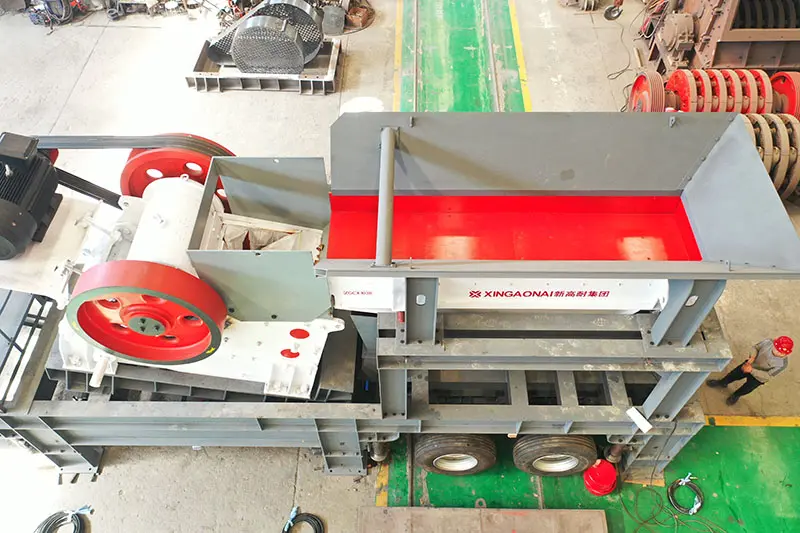
How to Choose the Right Mobile Jaw Crushing Plant?
Material Type & Hardness: Choose a model with a robust jaw crusher for hard materials (granite, basalt) or a lighter design for concrete recycling.
Production Capacity: Options range from 50-100 TPH (small-scale) to 200-500 TPH (large-scale) to match project needs.
Mobility Requirements: Tracked models for rough terrain; wheeled models for frequent relocation between paved sites.
Environmental Compliance: Prioritize models with dust suppression systems and low noise levels for urban or eco-sensitive areas.