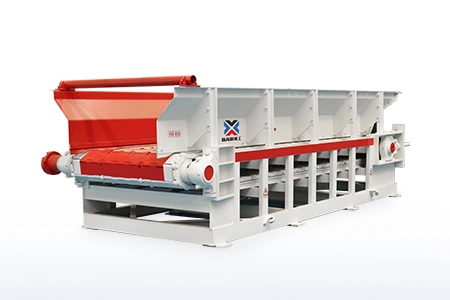
In industrial material handling, feeders are essential equipment used to transport bulk materials (such as coal, ore, aggregates, and grains) from storage bins, hoppers, or crushers to downstream processing equipment. Two of the most widely used types are belt feeders and apron feeders.
While both serve the same core purpose—controlled, uniform feeding—they differ significantly in design, working principle, performance, and ideal applications. Understanding the differences between belt feeder vs
apron feeder is critical for businesses to select the right equipment, optimize operational efficiency, and reduce long-term costs.
Core Working Principles: Belt Feeder vs Apron Feeder
The fundamental difference between belt feeder and apron feeder lies in their design and how they transport materials. Each operates on a distinct principle that impacts their suitability for different tasks.
How a Belt Feeder Works
A belt feeder consists of a continuous, flexible belt (usually made of rubber, PVC, or fabric) wrapped around two pulleys—one drive pulley and one idler pulley. The drive pulley rotates, moving the belt forward to transport materials placed on its surface.
Materials are fed onto the belt from a hopper or bin, and the belt’s speed can be adjusted to control the feed rate. The belt’s smooth surface ensures gentle handling of materials, making it ideal for non-abrasive or fragile bulk goods.
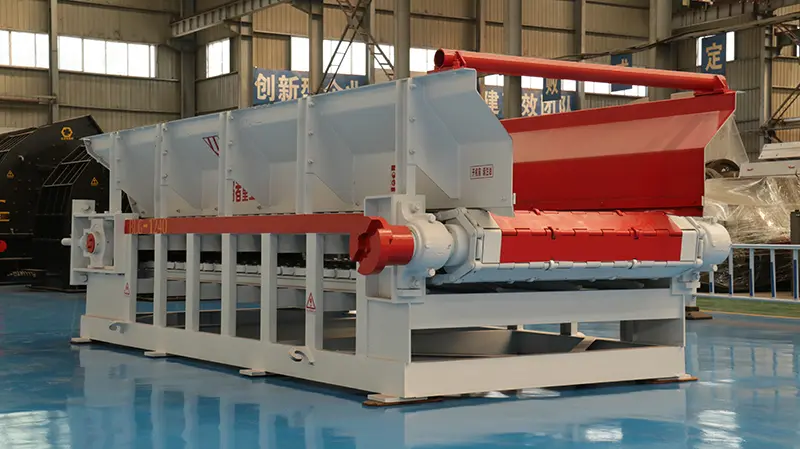
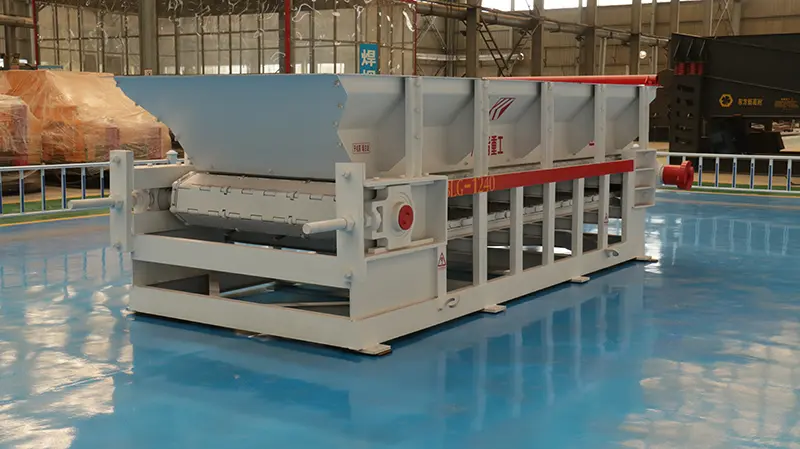
An apron feeder (also known as a pan feeder) uses a series of interlocking, rigid plates (or pans) connected to a chain or belt. These plates form a continuous, sturdy surface that moves along a track, driven by a sprocket system.
Materials are deposited onto the plates, which carry them forward before discharging into downstream equipment. The rigid plates are designed to withstand heavy, abrasive, or sharp materials, making the apron feeder suitable for harsh industrial environments.
Key Differences Between Belt Feeder and Apron Feeder
To better understand belt feeder vs apron feeder, we break down their differences in design, performance, maintenance, and more—factors that directly influence equipment selection.
1. Design & Construction
Belt Feeder: Simple design with a flexible belt, pulleys, idlers, and a drive system. The belt is the primary component, supported by idlers to prevent sagging. It has fewer moving parts, making it lightweight and easy to install.
Apron Feeder: Robust design with interlocking steel or cast iron plates, chains, sprockets, and a heavy-duty frame. The plates are thick and durable, designed to resist impact and wear. It has more moving parts, resulting in a heavier, more complex structure.
2. Material Handling Capabilities
Belt Feeder: Best suited for non-abrasive, free-flowing materials such as grains, coal, limestone, and lightweight aggregates. It can handle materials with moderate moisture but may struggle with sticky or highly abrasive materials (which can damage the belt).
Apron Feeder: Designed for heavy, abrasive, sharp, or sticky materials such as iron ore, granite, bauxite, and wet sludge. The rigid plates can withstand impact from large, heavy particles and resist wear from abrasive materials.
3. Feed Rate & Capacity
Belt Feeder: Typically offers lower to medium feed rates (up to 1,000 tons per hour), depending on the belt width and speed. It provides precise, uniform feeding, making it ideal for applications where consistent feed rate is critical.
Apron Feeder: Handles higher feed rates (up to 5,000 tons per hour or more) and can accommodate larger, heavier material lumps. It is better suited for high-capacity industrial operations, such as large-scale mining or aggregate processing.
4. Durability & Wear Resistance
Belt Feeder: The flexible belt is prone to wear, tearing, or damage from sharp materials or excessive load. It requires regular replacement of the belt, especially in abrasive environments. Service life is shorter in harsh conditions.
Apron Feeder: The rigid steel plates and heavy-duty chains are highly durable and resistant to wear, impact, and corrosion. It has a longer service life in harsh industrial environments, even when handling abrasive materials.
5. Maintenance Requirements
Belt Feeder: Lower maintenance requirements due to fewer moving parts. Routine maintenance includes belt tension adjustment, idler lubrication, and periodic belt inspection/replacement. Maintenance is simple and can be performed quickly.
Apron Feeder: Higher maintenance needs due to more moving parts (chains, sprockets, plates). Routine maintenance includes chain lubrication, plate inspection/replacement, and sprocket alignment. Repairs can be more complex and time-consuming.
6. Cost (Initial & Operational)
Belt Feeder: Lower initial purchase cost due to its simple design. Operational costs are also lower, as maintenance is less frequent and replacement parts (e.g., belts) are more affordable.
Apron Feeder: Higher initial purchase cost due to its robust construction and complex design. Operational costs are higher due to more frequent maintenance and expensive replacement parts (e.g., plates, chains).
7. Environmental Adaptability
Belt Feeder: Performs well in dry, moderate environments but may struggle in extreme temperatures (high or low) or wet conditions (which can cause belt slipping or damage).
Apron Feeder: Highly adaptable to harsh environments, including extreme temperatures, wet conditions, and dusty or corrosive settings. It is commonly used in outdoor mining operations or areas with harsh weather.
Advantages & Disadvantages of Belt Feeder vs Apron Feeder
Understanding the pros and cons of each feeder type helps businesses make informed decisions based on their specific needs.
Belt Feeder: Advantages & Disadvantages
Advantages:
Simple design, easy installation, and low initial cost
Precise, uniform feed rate for consistent downstream processing
Gentle material handling, suitable for fragile or non-abrasive materials
Low maintenance requirements and operational costs
Quiet operation compared to apron feeders
Disadvantages:
Not suitable for abrasive, sharp, or heavy materials
Belt is prone to wear, tearing, and damage
Poor performance in wet or extreme temperature conditions
Limited capacity for high-volume operations
Apron Feeder: Advantages & Disadvantages
Advantages:
Robust design, ideal for heavy, abrasive, and sharp materials
High feed capacity and ability to handle large material lumps
Durable and long-lasting in harsh industrial environments
Adaptable to wet, dusty, and extreme temperature conditions
Resistant to material buildup and clogging
Disadvantages:
High initial purchase and operational costs
Complex maintenance with more moving parts
Louder operation compared to belt feeders
Heavier and more difficult to install and move
Which Feeder Should You Choose? Belt Feeder vs Apron Feeder
The choice between belt feeder and apron feeder depends on your specific application, material type, feed rate, environment, and budget. Here’s a quick guide to help you decide:
Choose a Belt Feeder If:
You handle non-abrasive, free-flowing materials (e.g., coal, grains, lightweight aggregates)
Precise, uniform feeding is a priority
You have a limited budget (initial and operational)
Your operation is in a dry, moderate environment
You need low maintenance and quiet operation
Choose an Apron Feeder If:
You handle heavy, abrasive, sharp, or sticky materials (e.g., iron ore, granite, wet sludge)
You require high feed capacity (over 1,000 tons per hour)
Your operation is in a harsh environment (outdoor, wet, extreme temperatures, dusty)
Durability and long service life are critical
You can accommodate higher initial and maintenance costs
Common Applications of Belt Feeder vs Apron Feeder
Both feeders are used in a variety of industrial sectors, but their applications are tailored to their strengths.
Belt Feeder Applications
Grain and agriculture processing
Coal handling (non-abrasive coal)
Lightweight aggregate processing (e.g., limestone, sand)
Food and pharmaceutical processing (gentle material handling)
Small to medium-scale mining operations
Apron Feeder Applications
Large-scale mining (iron ore, bauxite, copper ore)
Aggregate processing (granite, basalt, crushed stone)
Wastewater treatment (wet sludge handling)
Cement and concrete production (abrasive materials)
Outdoor and harsh environment operations
Conclusion
In the comparison of belt feeder vs
apron feeder, there is no “one-size-fits-all” solution. Each feeder type has its own strengths and weaknesses, and the right choice depends on your specific operational needs.
Belt feeders are ideal for low-cost, low-maintenance, and gentle material handling in moderate environments, while apron feeders excel in harsh conditions, handling heavy and abrasive materials with high capacity and durability.
By understanding the key differences, advantages, and applications of belt feeder vs apron feeder, you can select the equipment that optimizes your material handling process, reduces costs, and ensures long-term operational efficiency