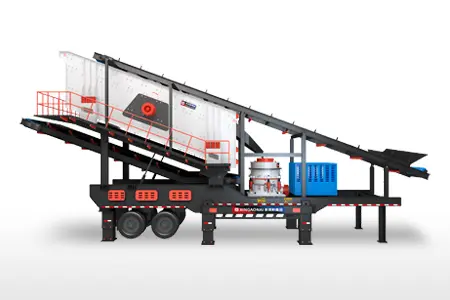
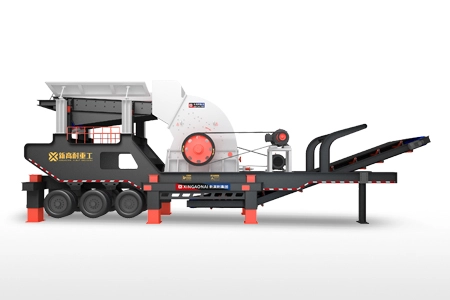
Mobile crusher blockage is a major culprit for production downtime, affecting operational efficiency and increasing maintenance costs. As a flexible and widely used mining equipment, mobile crushers are prone to clogging due to material, operation, or equipment-related issues. Below is a detailed breakdown of the root causes, targeted solutions, and prevention tips to keep your crushing line running smoothly.
Different material properties directly impact crushing efficiency and blockage risks. If the crushed material’s hardness exceeds the equipment’s capacity, or the feed particle size surpasses the specified range (e.g., larger than the crusher’s maximum feed size), insufficient crushing will lead to blockage. Additionally, materials with high viscosity or large volume are prone to adhering to the crushing chamber, causing poor discharge and clogging. Using normal feeding speeds for special materials (e.g., high-humidity ores) can also trigger blockage.
Mobile crushers require uniform feeding to match their processing capacity. If the feeder’s speed is set too high—exceeding what the crusher can handle—the equipment will be overloaded. This not only accelerates wear of crushing parts but also leaves materials uncrushed in time, resulting in blockage. Conversely, overly slow feeding reduces production efficiency, so balancing speed is critical.
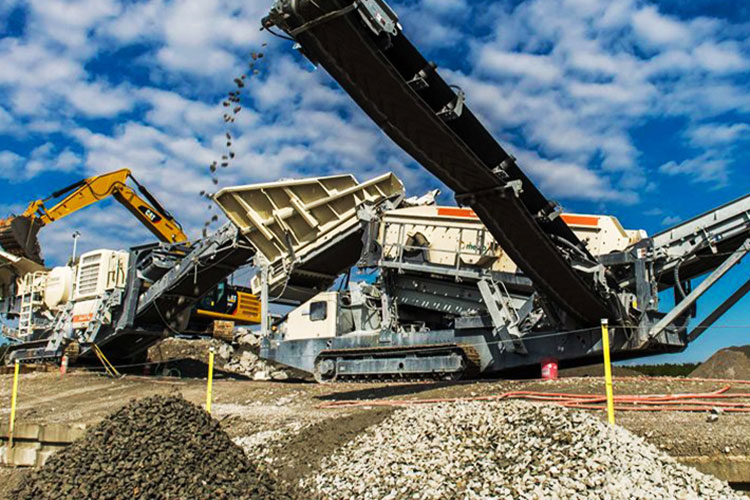
Feeding and discharge speeds must be balanced to avoid blockage. Unreasonable adjustment of the discharge port (e.g., overly small size) or improper setting will cause a backlog of crushed materials inside the machine, slowing down discharge and leading to clogging. Changes in crushed material properties (e.g., particle size, viscosity) also require timely adjustment of the discharge port—otherwise, blockage risks rise.
Although
mobile crushers are equipped with simple electrical control systems, their integrated design requires skilled operators. Many blockages stem from human error: for example, failing to reduce feeding speed when material humidity increases, overfeeding to pursue higher output, or operating against procedures. Operators unfamiliar with the equipment’s specifications or production line processes may also make temporary mistakes that cause blockage.
The motor is the power core of the mobile crusher. If the motor malfunctions (e.g., component damage), the crushing parts will lose their crushing capability. Uncrushed materials will accumulate at the discharge port, leading to blockage. In such cases, the faulty motor must be replaced promptly to resume operations.
Mobile crusher motors require stable voltage to work effectively. If the voltage supplied is unstable or too low, the motor may still rotate but will lack sufficient power to crush materials in the chamber. This causes materials to pile up and clog the crusher, disrupting production.
For Material Issues: Select the appropriate mobile crusher model based on material properties (hardness, viscosity, particle size). Pre-screen materials to remove oversized or incompatible particles before feeding.
For Over-Feeding: Adjust the feeder speed according to the crusher’s rated processing capacity, ensuring uniform feeding. Install a feeding control system to avoid overload.
For Slow Discharge: Regularly check and adjust the discharge port size based on material properties and desired finished product specifications. Clear any accumulated material in the discharge channel promptly.
For Operator Errors: Provide rigorous training for operators, ensuring they are qualified before taking up posts. Train them to master equipment operating procedures, production line processes, and emergency handling for material changes (e.g., humidity spikes).
For Motor Failures: Conduct daily pre-operation inspections of the motor (e.g., wiring, components). Replace faulty motors immediately and perform regular maintenance to prevent malfunctions.
For Voltage Issues: Equip the production site with a stable power supply system (e.g., voltage stabilizer). Monitor voltage levels during operation and stop working if abnormalities occur to avoid blockage and motor damage.
Conduct daily inspections: Check the crushing chamber, discharge port, and feeding system for potential blockage points (e.g., material adhesion, component wear).
Control material quality: Pre-treat materials (drying, screening) to reduce viscosity and remove oversized particles.
Maintain equipment regularly: Lubricate crushing parts, check motor performance, and replace worn components (e.g., liners, blades) in a timely manner.
Record operational data: Track feeding speed, voltage stability, and material properties to identify patterns and adjust operations proactively.
By addressing these core reasons and following targeted solutions and prevention tips, you can effectively minimize mobile crusher blockage, reduce downtime, and maintain efficient, stable production. For customized mobile crusher solutions or technical support, contact
Xingaonai’s professional team.